
When opening a mining area, TBP stores the soil used as a cover at the end of the overburden. This soil is useful as a medium for vegetation growth and able to increase the ability of plantation media on the waste rock. Along with mining activities, we also conduct reclamation and revegetation on mining areas that are no longer used for smelter and refinery facilities. This activity is carried out as soon as possible to prevent erosion, maintain the stability of the mine slope structure, reshape the structure and diversity of the vegetation as before mining, and support the formation of certain plant species that play an important role in restoring wildlife habitat.
A reforestation program is also carried out in the operational area of the saprolite nickel smelter and nickel limonite processing & refining for maintaining local biodiversity.
The need of seeds for mine land reclamation and reforestation comes from the company's nursery with several types of fast-growing plants, local species, and fruit trees, including eucalyptus, jabon merah, mahogany, and lemongrass.
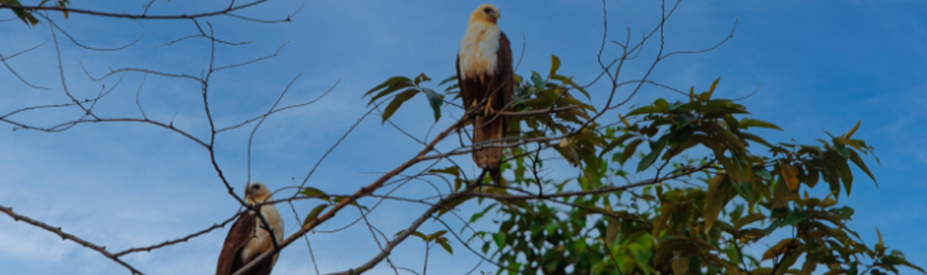
TBP also conducts surveys on the diversity of flora and fauna in the mining and factory areas, both by internal employees and involving academicians. The results of independent academic monitoring in 2021 discovered the presence of wild animals in several project areas, especially birds and reptiles. The presence of these animals indicates that the biodiversity around the project area is maintained.
In 2024, Harita Nickel conducted the mining industry’s first-ever island-wide Landscape-Level Natural Risk Assessment (LNRA) on Obi Island, a groundbreaking step in evaluating the potential environmental and social impacts of its operations.
Led by PTID, the digital arm of the Earthqualizer Foundation, the study extended beyond Harita Nickel’s operational boundaries, assessing the entire island’s physical, commercial, administrative, natural, and community landscapes. By identifying key nature-related risks and mitigation strategies, the LNRA created a responsible mining scenario—arming Harita Nickel with a roadmap for sustainable development.
Setting a new benchmark for environmental stewardship, the assessment focused on four key areas of the island: Laiwui, the coastal village of Fluk, the Karst landscape between Anggai and Kelo villages, and the industrial area. It examined forests, water bodies, biodiversity hotspots, land use, and community livelihoods, providing a comprehensive understanding of nature’s delicate balance.
The LNRA also reinforces Harita Nickel’s commitment to conserving 30% green space within the industrial park and achieving Net Conservation Gain by 2043. It plays a vital role in protecting primary forests, high conservation value (HCV) areas, and essential community resources, ensuring that progress and preservation go hand in hand.
Go Top